Handpicked

React Suspense: Beyond Data Fetching with Suspensive
React Suspense promised a new way to handle asynchronous operations, but its official use cases still feel limited. What if you could use Suspense for more than just data fetching, truly orchestrating your component rendering flow? Let's dive into how libraries like Suspensive are pushing these boun
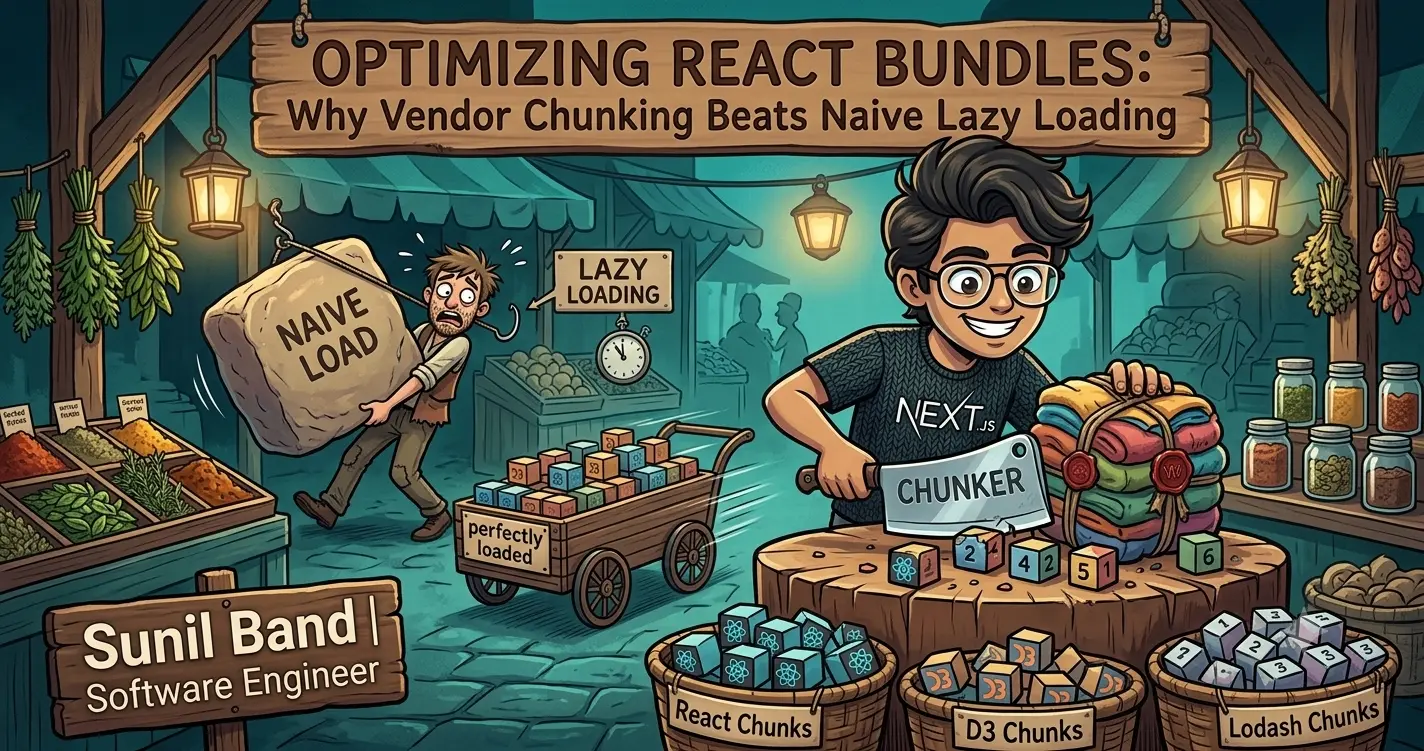
Optimizing React Bundles: Why Vendor Chunking Beats Naive Lazy Loading
Lazy loading is great, but splitting your bundle into arbitrary component chunks often misses the bigger picture. Vendor chunking, on the other hand, strategically isolates stable dependencies, leading to better cache hit rates and a genuinely faster user experience.
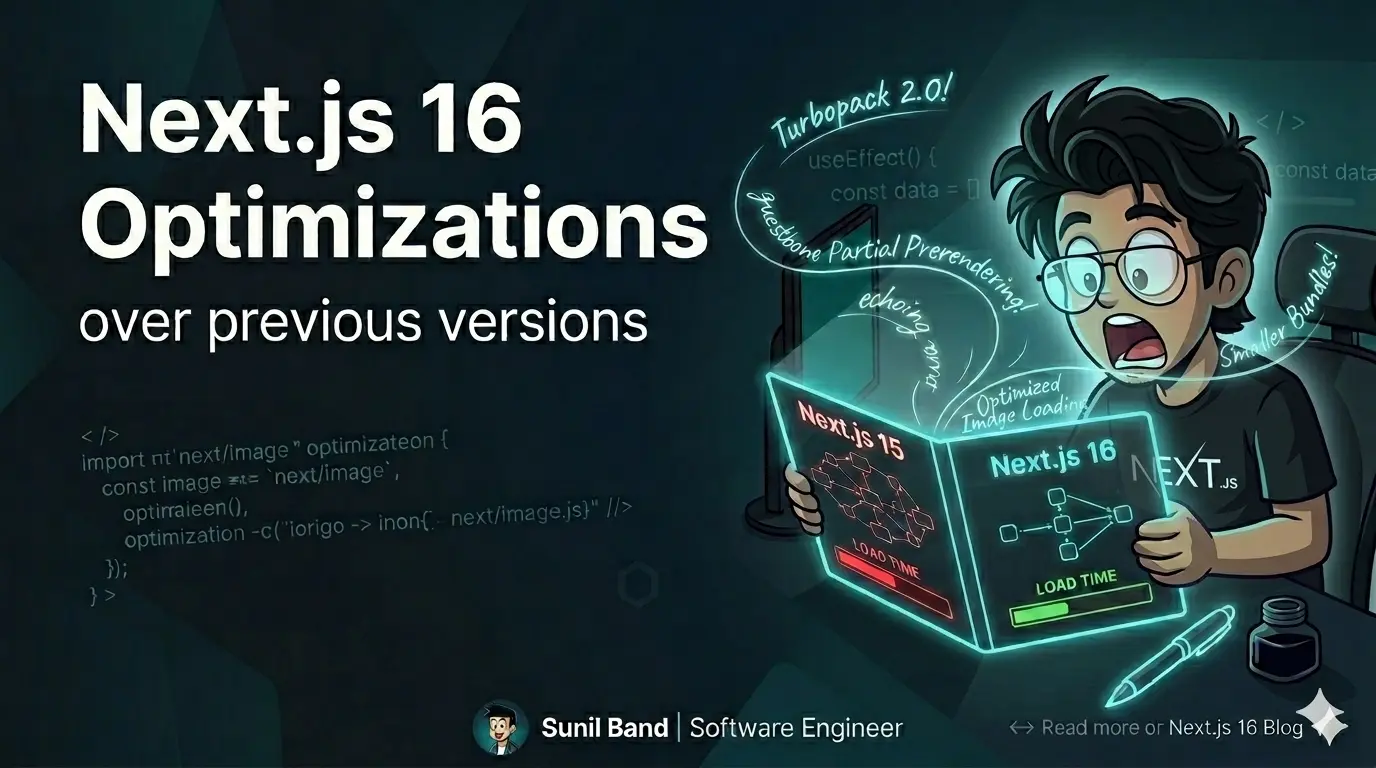
Next.js 16: Every Major Optimization You Need to Know
Next.js 16 replaces Webpack with a stable Turbopack, introduces the use cache directive for explicit caching, ships React Compiler support, and overhauls routing with layout deduplication — making it the most performance-focused release in the framework's history.

When Your Frontend Needs to Process Files, Not Just Upload Them: Diving into WebAssembly
Sending user-generated files to a backend for processing often feels like the default, but it's not always the best solution. We'll explore how WebAssembly lets us handle complex file operations directly in the browser, boosting privacy and performance.

When Your Next.js App Needs to Speak Every Language: Diving into next-intl
Internationalization often feels like an afterthought until your product manager drops the 'global market' bomb. Suddenly, every string, date, and currency needs to adapt. While Next.js provides some primitives, a robust i18n solution is crucial, and next-intl makes this surprisingly elegant.

When Your React App Needs a 3D Dimension: Embracing React Three Fiber
Integrating 3D experiences into web applications used to be a mess of imperative Three.js code. React Three Fiber changes that, letting you build complex 3D scenes with familiar React components and state management. It's a game-changer for interactive visualizations and immersive UIs.

When Your React State Is Lying to You: Derived State Done Right
It's easy to fall into the trap of syncing a computed value into `useState`, leading to stale UI, extra renders, and subtle bugs. Let's fix derived state.

When Your API Contract Becomes Your Type System
I've been burned by runtime data validation too many times. You write an API, define types for it, but at runtime, the data coming in doesn't match. Zod lets your schema *be* your type definition, catching errors earlier and making your backend and frontend more robust.

When Your UI Needs to Be Truly Cross-Platform: Diving into Tamagui
Building a truly performant and consistent UI across web and native platforms has always been a tightrope walk. You either compromise on native feel, or you double your effort. Tamagui promises a different path: compile-time optimization, styled components, and a shared core that feels right everywh

When Your Electron App Needs a Real Shell, Not Just a Webview
I've built countless Electron apps, and the boilerplate fatigue is real. Every time, I'd find myself re-implementing the same basic structure: inter-process communication, auto-updates, secure configuration, and a consistent UI shell. It's not just about getting a webview to show up; it's about buil

When Your Frontend Needs to Read the Fine Print: Diving into Tesseract.js for OCR
Ever needed to extract text from an image directly in the browser? Sending everything to a backend API can be slow and expensive. Tesseract.js brings full-fledged OCR capabilities right to your client-side applications, offering a powerful, offline-first solution for text recognition.

When Your Typescript Needs a Real Workout: Diving into Type Challenges
I've seen countless teams struggle with TypeScript, not because they don't understand the basics, but because they haven't truly pushed its type system to its limits. This isn't just about avoiding `any`; it's about leveraging the compiler to enforce complex invariants at compile time. That's where