Posts tagged with #Frontend
73 posts

When Your Frontend Needs to Process Files, Not Just Upload Them: Diving into WebAssembly
Sending user-generated files to a backend for processing often feels like the default, but it's not always the best solution. We'll explore how WebAssembly lets us handle complex file operations directly in the browser, boosting privacy and performance.

When Your Next.js App Needs to Speak Every Language: Diving into next-intl
Internationalization often feels like an afterthought until your product manager drops the 'global market' bomb. Suddenly, every string, date, and currency needs to adapt. While Next.js provides some primitives, a robust i18n solution is crucial, and next-intl makes this surprisingly elegant.

When Your React App Needs a 3D Dimension: Embracing React Three Fiber
Integrating 3D experiences into web applications used to be a mess of imperative Three.js code. React Three Fiber changes that, letting you build complex 3D scenes with familiar React components and state management. It's a game-changer for interactive visualizations and immersive UIs.

When Your React State Is Lying to You: Derived State Done Right
It's easy to fall into the trap of syncing a computed value into `useState`, leading to stale UI, extra renders, and subtle bugs. Let's fix derived state.

When Your Frontend Needs to Read the Fine Print: Diving into Tesseract.js for OCR
Ever needed to extract text from an image directly in the browser? Sending everything to a backend API can be slow and expensive. Tesseract.js brings full-fledged OCR capabilities right to your client-side applications, offering a powerful, offline-first solution for text recognition.

When Your React App Renders Twice and No One Knows Why: Understanding Hydration
Ever built a React app that seems to flicker on load, or worse, throws hydration errors that make no sense? You're not alone. I've been down the React hydration rabbit hole, and it's a critical concept for anyone building performant and stable server-rendered React applications.

When Your Data Visualization Needs to Be More Than Just a Static Chart: Diving into Plotly.js
Tired of static charts that only tell half the story? Plotly.js offers a powerful way to bring your data to life with rich interactivity, letting users explore and understand complex datasets directly in their browser. It's not just about pretty graphs; it's about making data explorable.

When Your Markdown Notes Need to Act Like a Database: Diving into SilverBullet
I've been using Markdown for notes and documentation for years, but it always felt like I was leaving so much on the table. How do you query across files? How do you create dynamic dashboards? SilverBullet finally tackles this, turning simple Markdown into a surprisingly powerful, queryable knowledg

When Your React Components Need Real Slots: Beyond just `children`
React's 'children' prop is powerful, but when you need multiple distinct content areas, it falls short. Named slots are the common solution in other frameworks, and while React doesn't have them natively, we can build a robust, type-safe version using a clever trick: inspecting child types.

When Your Frontend Needs to Stop Managing Form State and Start Declaring It: React Form Actions
React 19 brings a paradigm shift for forms. No more manual loading states, error handling, or optimistic updates. With useActionState and useFormStatus, you declare your intent, and React handles the messy details, bringing server-side logic closer to your components.

When Your Frontend Needs True Real-Time Collaboration: Diving into Fluid Framework
Building truly collaborative web applications, where multiple users interact with the same data in real-time, is notoriously hard. Fluid Framework offers a different approach, abstracting away the complexities of distributed state management and conflict resolution. Let's see how it transforms colla

When Your Rich Text Editor Needs to Be as Capable as Your App: Diving into Plate
Building a rich text editor from scratch is a nightmare. Leveraging a robust framework like Plate, which integrates with modern UI libraries and even AI, changes the game for creating sophisticated content experiences within your applications.

When Your Frontend Needs to Get Crafty: Image Processing and Generative Art in the Browser
Pushing complex image processing and generative art into the browser might seem like a performance nightmare, but with modern web APIs, it's more feasible and powerful than you think. Let's build a tool that turns photos into pixel art, exploring how we can harness Web Workers and the Canvas API to

When Your Internal Tools Need to Be More Than Just CRUD: Embracing Refine's Flexibility
Building internal tools often feels like a race to slap a UI on a database. You start with basic CRUD, but then requirements spiral. Suddenly, you need complex workflows, custom data transformations, and specific UI interactions that generic admin panels just can't handle. Refine steps in here, offe

When Your UI Needs to Be Truly Collaborative: Yjs for Real-Time Shared State
Building a real-time collaborative application is notoriously difficult. Yjs offers a pragmatic solution by providing shared data types and a robust synchronization engine, enabling multiple users to edit the same document without complex conflict resolution logic.
When Your CLI Needs to Be a First-Class App: React for the Terminal with Ink
Building interactive command-line interfaces often means wrestling with low-level terminal escape codes or clunky libraries. Ink lets you use React's familiar component model to craft rich, dynamic CLIs that feel like native applications.

When Your Frontend Gets Creative: Image Processing in the Browser with WebAssembly
Pushing complex image processing directly to the client can seem daunting. But with WebAssembly, we can unlock serious computational power without hitting a server, opening doors for creative, responsive tools.

When Your Popovers and Tooltips Need to Be Perfect: Floating UI
Building UI components like tooltips, popovers, and dropdowns seems trivial until you account for screen edges, scrolling, and dynamic content. Floating UI is the library that solves these headaches by precisely positioning your floating elements, making them behave perfectly in any scenario.

When Your CSS Framework is Bloated, But You Still Want Utility Classes: UnoCSS
I've been a Tailwind user for years, but the build times and the sheer size of the generated CSS are starting to wear thin. UnoCSS promises the best of both worlds: utility-first CSS, but with an instant, on-demand engine that keeps your stylesheets lean.

When Your Frontend Needs to Go Beyond the Official API: The Power of Reverse Engineering
Official APIs are great, until they aren't enough. Sometimes, to build truly innovative features or unlock hidden potential, you need to look behind the curtain. YouTube.js is a prime example of leveraging reverse engineering to tap into powerful internal APIs, offering a level of control and functi

When Your Frontend Needs to Go Beyond the Official API: The Power of Reverse Engineering
Official APIs are great, but sometimes they fall short. We'll explore how libraries like YouTube.js tap into internal APIs by reverse engineering, and why this technique can unlock capabilities you never knew existed.

When Your Tiny Package Has a Secret Dependency Hoard
You built a small, focused React component. It's 4KB. You push it to npm. Then you look at the dependency tree and realize it's pulling in half the internet. What happened? And how do you fix it before your users pay the price?

When Your Mobile Camera Needs to Be More Than Just a Photo Button
React Native's built-in camera capabilities are fine for simple snapshots, but what if you need real-time computer vision, custom effects, or advanced control over the sensor? That's where libraries like react-native-vision-camera come in. It lets you tap into the raw power of the device camera, ope

When Your Emails Need to Be as Good as Your UI: React Email
Sending emails from your application often means dealing with HTML tables, inline styles, and inconsistent rendering across clients. It's a UX nightmare. React Email brings the component model and developer experience of React to building robust, beautiful emails.

When Your UI Needs to Break the Flat Screen: React and 3D with React Three Fiber
We've been building UIs on flat screens for decades. But what happens when you need something more? When data visualization demands depth, or an interactive product showcase needs a real sense of presence? React Three Fiber is the tool that lets you bring the full power of Three.js into your React a

When Your State Management Needs to Stop Thinking in Actions and Start Mutating
Many state management libraries force you into an 'actions and reducers' pattern. While powerful, it often adds unnecessary boilerplate for simple updates. Sometimes, you just need to directly modify state, and mutators offer a more ergonomic and intuitive approach, especially for deeply nested data

When Next.js Cache Components Refuse to Build Your App
Next.js 16.3 introduced 'Cache Components' to optimize server-side rendering, but getting them to work can be a headache. I spent a frustrating afternoon debugging why a simple page wouldn't build, only to uncover some subtle yet critical design considerations. It turns out, this feature forces you

Vite: When Your Dev Server Needs to Be as Fast as Your Code
We've all been there: waiting for a dev server to spin up, or watching HMR take precious seconds to reflect a simple CSS change. It breaks flow, kills productivity, and makes you wonder if you should just switch to a static HTML file. Vite changed that for me, fundamentally altering how I think abou
TypeScript Intersection Types: When They're Your Best Friend, and When They're Quietly Lying to You
Intersection types in TypeScript seem simple: combine two types. But what happens when those types have overlapping properties with different definitions? TypeScript won't always warn you, leading to silent failures that can be incredibly hard to debug. I'll show you when they work perfectly, when t

GrapesJS: Building a Custom Drag-and-Drop Editor for Your App, Not Just a Website
I've been down the road of building a drag-and-drop editor from scratch. It's a nightmare of state management, DOM manipulation, and edge cases. GrapesJS changes that by giving you a robust foundation to build *your* specific editor, not just a generic page builder.

When Your Frontend Accidentally Becomes a DDOS Attack
A seemingly innocent React change can sometimes unleash a storm of API requests, bringing down your backend. This isn't just about performance; it's about understanding how your UI choices translate to server load, and how a small oversight can have catastrophic effects.
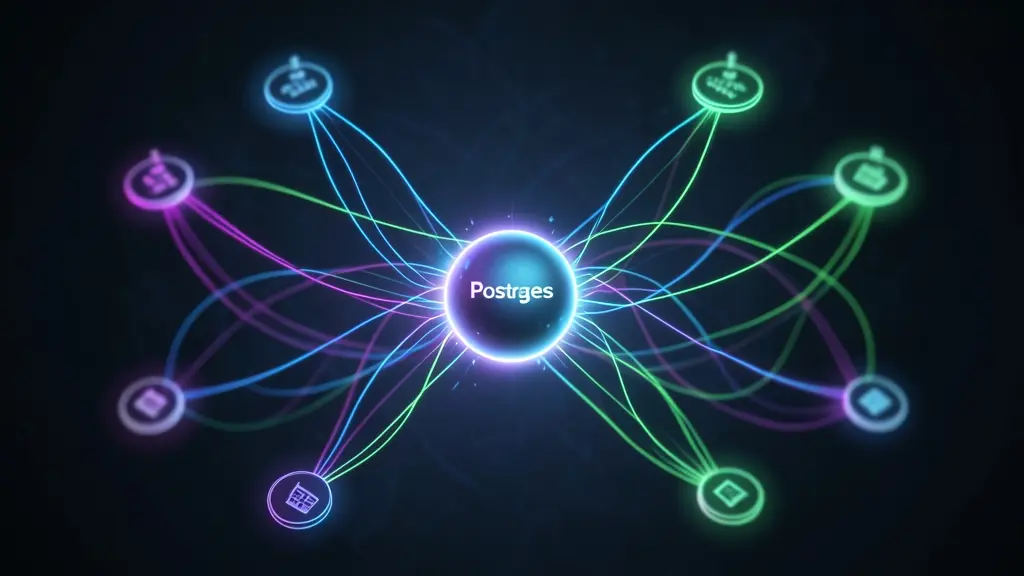
ElectricSQL: When Your Database Needs to Live on the Edge, Offline-First
Building a truly offline-first application that feels instant, even with complex data, is a monumental task. ElectricSQL promises to make this a reality by extending your Postgres database directly to the client, keeping everything in sync and highly available.

React's useEvent: The Stable Callback You've Been Waiting For
React developers constantly battle stale closures and the performance overhead of `useCallback`. The `useEvent` hook, though not yet stable, offers a potential solution for stable event handlers without the dependency array dance. It's a game-changer for component architecture and performance.

useMeasure and ResizeObserver: When Your UI Needs to Know Its Own Size
Often, your UI components need to react to their own dimensions, not just window size. The `ResizeObserver` API, combined with a custom React hook like `useMeasure`, is the robust solution for this, letting components adapt dynamically without complex hacks.

useOptimistic and useActionState: When Your Instant UI Needs a Safety Net
React 19's new hooks, useOptimistic and useActionState, are powerful tools for building highly responsive UIs and handling server actions. But combining them effectively, especially with form resets, requires a careful approach to state management to avoid unexpected behavior.

Yjs: When Your Backend is Just a Collaborative Data Structure
Building real-time collaborative features usually means diving deep into WebSockets, CRDTs, and complex backend state management. Yjs changes that by providing shared data types that handle all the hard parts, letting you focus on the UI.

When Your Frontend Needs Real-Time Collaboration Without the WebSocket Headaches
Building real-time collaborative features usually means wrestling with CRDTs or complex state synchronization over WebSockets. Microsoft's Fluid Framework offers a refreshingly opinionated alternative.

When Your CLI Needs a Real UI: Building Interactive Terminals with React and Ink
Command-line tools are powerful, but sometimes you need more than simple text output. When a complex workflow or real-time feedback calls for an actual user interface, traditional CLI development quickly becomes a pain. That's where Ink, a React renderer for the terminal, changes the game.

When Your Frontend Needs a Drag-and-Drop Page Builder, But Not a Generic CMS
Sometimes you need to let non-developers build parts of a UI, but existing CMS solutions are too generic. GrapesJS is a framework that lets you embed a fully-featured page builder into your application, giving you fine-grained control over what can be built and how.

React 19's useActionState: The Form State Hook You Didn't Know You Needed
Disabling a submit button is the bare minimum for form UX. React 19's useActionState goes further, offering a robust way to manage form loading, error, and data states right within your actions, making optimistic updates and server-driven UIs more natural.

Beyond Static Backgrounds: When Your UI Needs Dynamic Particle Effects
We often treat backgrounds as static elements, a simple gradient or an image. But what if your UI could subtly animate and respond without heavy Lottie files or complex canvas APIs? tsParticles offers a compelling middle ground for engaging user experiences.

Astro: When Your "Static" Site Needs to Be More Than Just Static
For years, we've debated static vs. dynamic, SSR vs. CSR. Astro offers a compelling third path for content-driven sites, letting you ship zero JavaScript by default while still pulling in interactive islands where you need them. It's a pragmatic approach to performance that rethinks how we build for

Optimistic UI: When Reality Bites Back (and How to Fix It)
Optimistic UI is a powerful pattern, but it's not without its gotchas. I'll show you how to handle a subtle race condition that can lead to inconsistent states, especially when users interact rapidly.

When Your Documentation Needs to Be an Interactive Sandbox
Static diagrams and theoretical explanations often fall short when teaching complex engineering or software concepts. What if your documentation could be a living, interactive tool, letting users experiment directly in the browser?

React Email: When Your Templating Engine Just Isn't Cutting It Anymore
Sending emails from your application usually means wrestling with old templating engines or verbose HTML strings. React Email changes the game, letting you compose rich, responsive emails with the same component model you use for your web apps. It's a breath of fresh air for a long-stagnant problem.

TypeScript Type Challenges: Beyond the Basics, Training Your Type-Level Brain
TypeScript type challenges aren't just for showing off; they're a powerful way to truly understand and master the TypeScript type system. Stop copy-pasting utility types and start building them yourself.

Internationalization in Next.js: Beyond the Basic `i18n.js` File
Setting up i18n in Next.js often starts with a simple JSON file, but real-world applications quickly outgrow that. `next-intl` offers a robust solution that integrates deeply with Next.js features, including Server Components, to manage translations more effectively and avoid common pitfalls.

Beyond the Canvas: When Your Frontend Becomes an AI Art Studio
Stable Diffusion, Midjourney, DALL-E 3 — these names are everywhere. But for frontend developers, the interaction often stops at calling an API or embedding a widget. InvokeAI, however, presents a different paradigm: bringing the full power of an AI art engine directly into a sophisticated web appli

Beyond the Marketing: When a No-Code Editor Becomes Your Component Playground
I've been wary of 'no-code' tools. They often promise the moon but deliver a walled garden, abstracting away too much and leaving you stranded when you need real customizability. GrapesJS, however, isn't just another drag-and-drop editor; it's a web builder framework. This distinction fundamentally

Beyond Snapshot Fatigue: Streamlining Visual Regression Testing
Visual regression tests are crucial for UI stability, but they can be a pain to maintain and run. Let's talk about how to make them fast and useful again.